Whoa, this blockchain moves fast. Solana’s throughput can make your head spin. I remember the first time I watched a block stream by—my laptop hummed and I felt like I was peeking under the hood of a jet engine. Seriously? Yes. Seriously. The explorer is the place you go when you want to understand what that engine is actually doing, not just hear it roar.
Okay, so check this out—blockchain explorers on Solana do three core jobs. They index on-chain data for humans to read. They show transactions, token transfers, program interactions, and block details in a readable way. My instinct said that explorers are just “nice-to-have” tools, but then I used one during a token drop and realized they’re indispensable—especially when trouble hits and you need to trace a transaction. Initially I thought a single explorer would be enough, but actually, different explorers surface different metadata and user-friendly features, so you’ll want options.
Here’s the thing. Transactions on Solana look simple on the surface. A signer, a program, and some accounts. But under the hood there’s recent blockhash references, fee computations, and sometimes multiple inner instructions that tell the real story. Hmm…sometimes you open a tx and it’s clean. Other times you see a chain of inner instructions that explain why funds moved in unexpected ways. On one hand, raw logs can be cryptic; on the other hand, good explorers parse those logs into readable events and token transfers, which is huge for debugging or audits.
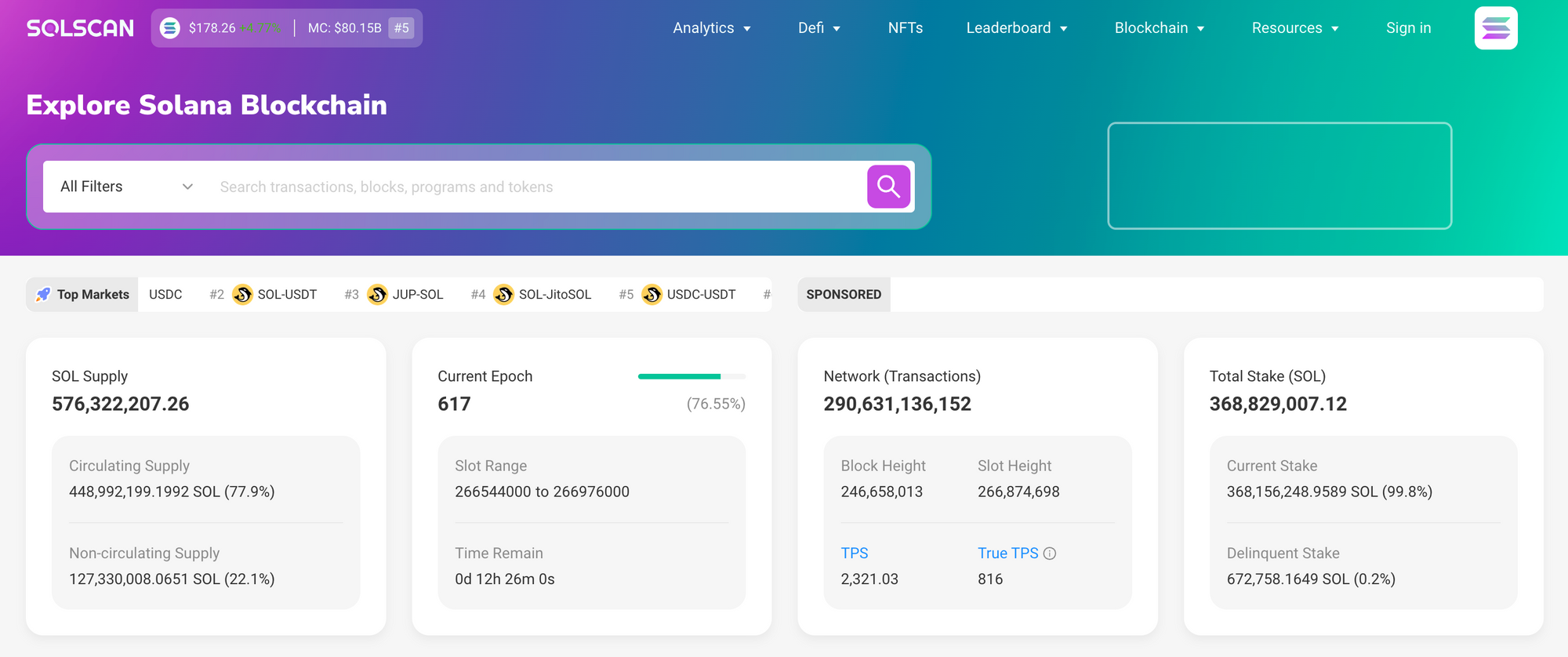
How to read Solana transactions like a human (not a robot)
First, find the transaction signature. It’s the key. Paste it into the explorer and watch the timeline. You’ll see status, block slot, and execution logs. Then check the fee and the accounts touched. If there are inner instructions, expand them. Often those inner calls are why something failed, or why tokens wound up somewhere unexpected.
Next, look at token movements. Many explorers show token transfers derived from program logs rather than raw token program instructions, which can catch swaps or liquidity events that a quick glance would miss. I’m biased, but I like explorers that group transfers by token mint and show balances before and after. It helps when you’re tracking airdrops or chasing a rug—ugh, that phrase still makes me wince.
Want provenance? Trace the account history. You can follow a wallet through a sequence of transfers, program interactions, and stake moves. Sometimes you learn that a wallet is a bot because the timing between txs is weirdly consistent. Other times the history reveals a user strategy, like repeatedly interacting with a specific DEX. It’s a small thing, but patterns emerge if you let them.
Okay, here’s a practical note that saved me time: when a tx fails, read the logs before assuming the worst. Failure messages often include program-level errors or precondition failures. That told me, more than once, that a transaction bounced because of a missing rent exemption or a wrong account ordering—and not because of a malicious actor. That distinction matters.
Which features actually help you do things?
Search by slot, signature, account, or program. Filters are your friend. Use them. Really. Filters let you narrow a flood of transactions into the few that matter. Exporting CSVs is great for audits or sharing with teammates. Some explorers also let you decode program instructions into high-level actions—swaps, burns, mints—so you don’t have to parse raw base64 data. That saves hours.
For devs, logs and stack traces are gold. For normal users, token transfers and balance deltas matter. For auditors, deterministic data like slots and block hashes are non-negotiable. On a practical level, if you want to verify an airdrop, check both the token transfer and the mint authority activity. If something smells off, follow the program calls back a few steps and you’ll probably find the cause.
By the way, I used a specific explorer to dig through a messy stake reallocation once. It showed me inner instructions cleanly grouped, and that changed how I wrote my error handling. If you’re building on Solana, that sort of visibility should be part of your debugging toolkit. (oh, and by the way… keep notes on recurring errors; they repeat.)
When picking an explorer, think about trust and longevity. Open-source explorers that maintain mirrors or multiple RPC endpoints reduce single-point failures. Paid services sometimes offer better indexing and uptime, but they can be black boxes. I’m not 100% set on one approach, and different teams will choose differently depending on their risk tolerance.
Where to go next
If you want a solid, user-friendly Solana explorer that I frequently use and which helped me debug complicated transactions, check this resource here. It surfaced inner instruction details and token transfers in a way that saved me from chasing the wrong lead more than once.
Also—keep tooling in layers. Use a public explorer for quick lookups. Use RPC nodes and dedicated indexers for programmatic queries. If you’re investigating an incident, cross-check results with multiple explorers and RPCs. Redundancy matters. And yes, even with great tooling you will sometimes run into inconsistent RPC responses, so patience and cross-validation are key.
FAQ
How do I find a transaction signature?
It’s usually in your wallet history or the DApp’s transaction receipt. Copy and paste it into the explorer search bar. If you don’t see it, try refreshing RPC caches or checking nearby slots; sometimes signatures take a few seconds to propagate.
Why did my transaction fail?
Check execution logs for program errors. Common causes include insufficient funds for fees, incorrect account ordering, rent-exempt issues, or a program-level assert. Reading inner instruction logs often reveals the root cause.
Can I trust explorer balances for accounting?
Explorers are accurate for on-chain state, but remember that off-chain snapshots or indexed views may lag. For precise accounting, query the RPC or your own indexer; explorers are great for quick verification but avoid relying on a single source for critical audits.